Fesenko Law Offices

1050 30th Street NW, Washington, DC 20007 TEL +1 202 821 2303
30 Wall Street, 8th Floor, New York, NY 10005 TEL +1 212 542 0240

  • US Sanctions
    • OFAC Licenses Explained: What They Are and How They Work
    • Unblocking Assets Through Litigation: How to Recover Funds Frozen by U.S. Sanctions
    • OFAC SDN List Removal: A Petition First, Then Court If Needed
    • SDN List Removal Through Litigation While the Graham Act Is Waived
    • Representation of Clients Before OFAC: What an OFAC Attorney Actually Does
    • How to Stay Out of the OFAC Sanctions List
  • Business in the U.S.A.
    • Startup in the U.S.A.
    • Register a Company in the USA: Entity, State and What Comes After
    • Register an LLC in the U.S.A.
    • Register a Corporation in the U.S.A.
    • Proof of Source of Funds for a Bank
  • News
  • Why Fesenko Law Offices
  • Contact Us

  • EN
  • RU

Fesenko Law Offices

1050 30th Street NW, Washington, DC 20007 TEL +1 202 821 2303
30 Wall Street, 8th Floor, New York, NY 10005 TEL +1 212 542 0240

  • US Sanctions
    • OFAC Licenses Explained: What They Are and How They Work
    • Unblocking Assets Through Litigation: How to Recover Funds Frozen by U.S. Sanctions
    • OFAC SDN List Removal: A Petition First, Then Court If Needed
    • SDN List Removal Through Litigation While the Graham Act Is Waived
    • Representation of Clients Before OFAC: What an OFAC Attorney Actually Does
    • How to Stay Out of the OFAC Sanctions List
  • Business in the U.S.A.
    • Startup in the U.S.A.
    • Register a Company in the USA: Entity, State and What Comes After
    • Register an LLC in the U.S.A.
    • Register a Corporation in the U.S.A.
    • Proof of Source of Funds for a Bank
  • News
  • Why Fesenko Law Offices
  • Contact Us

  • EN
  • RU

Fesenko Law Offices
  • US Sanctions
    • OFAC Licenses Explained: What They Are and How They Work
    • Unblocking Assets Through Litigation: How to Recover Funds Frozen by U.S. Sanctions
    • OFAC SDN List Removal: A Petition First, Then Court If Needed
    • SDN List Removal Through Litigation While the Graham Act Is Waived
    • Representation of Clients Before OFAC: What an OFAC Attorney Actually Does
    • How to Stay Out of the OFAC Sanctions List
  • Business in the U.S.A.
    • Startup in the U.S.A.
    • Register a Company in the USA: Entity, State and What Comes After
    • Register an LLC in the U.S.A.
    • Register a Corporation in the U.S.A.
    • Proof of Source of Funds for a Bank
  • News
  • Why Fesenko Law Offices
  • Contact Us

  • EN
  • RU

  • US Sanctions
    • OFAC Licenses Explained: What They Are and How They Work
    • Unblocking Assets Through Litigation: How to Recover Funds Frozen by U.S. Sanctions
    • OFAC SDN List Removal: A Petition First, Then Court If Needed
    • SDN List Removal Through Litigation While the Graham Act Is Waived
    • Representation of Clients Before OFAC: What an OFAC Attorney Actually Does
    • How to Stay Out of the OFAC Sanctions List
  • Business in the U.S.A.
    • Startup in the U.S.A.
    • Register a Company in the USA: Entity, State and What Comes After
    • Register an LLC in the U.S.A.
    • Register a Corporation in the U.S.A.
    • Proof of Source of Funds for a Bank
  • News
  • Why Fesenko Law Offices
  • Contact Us

Lukoil Foreign Assets Sale: GL 131E Extends the Negotiation Window to May 30, 2026

May 4, 2026 US Sanctions
Home | US Sanctions | Lukoil Foreign Assets Sale: GL 131E Extends the Negotiation Window to May 30, 2026

Table of Contents

  • What Happened on April 29, 2026
  • The GL 131 Series: Fifth Extension and a Narrowing Horizon
  • The Authorization Perimeter of GL 131E
  • OFAC’s Conditions for Approving the LIG Sale
  • Parallel Tracks: GL 128C and GL 130A
  • Signals for Negotiators and Compliance Teams
  • Practical Recommendations

What Happened on April 29, 2026

On April 29, 2026, the U.S. Treasury Department’s Office of Foreign Assets Control (OFAC) issued General License No. 131E (GL 131E), extending the authorization for negotiations and the execution of conditional contracts for the sale of Lukoil International GmbH (LIG), the Austrian holding company through which Lukoil manages its foreign operations. The new expiration date is May 30, 2026. OFAC simultaneously updated FAQs 1224 and 1225, replacing references to GL 131D with references to GL 131E.

GL 131E fully replaces GL 131D, which was issued on March 30, 2026. The substantive terms of the authorization are unchanged: the same categories of permitted activity, the same exclusions, the same limitations. Only the deadline has shifted, granting the parties an additional 30 days. This is the fifth extension in the GL 131 series.

The Lukoil foreign assets sale remains a focal point of OFAC’s policy posture, but the rhythm and signaling of the extensions are evolving.

The GL 131 Series: Fifth Extension and a Narrowing Horizon

The GL 131 series began on November 14, 2025, when OFAC, days after adding Lukoil to the SDN List, issued the original general license to govern negotiations over the company’s foreign portfolio. The chronology illustrates how the licensing horizon has shifted:

  • GL 131 (November 14, 2025): initial authorization through December 13, 2025, a 29-day window.
  • GL 131A (December 10, 2025): extended through January 17, 2026, a 38-day window.
  • GL 131B (January 14, 2026): extended through February 28, 2026, a 42-day window.
  • GL 131C (February 26, 2026): extended through April 1, 2026, a 32-day window.
  • GL 131D (March 30, 2026): extended through May 1, 2026, a 32-day window.
  • GL 131E (April 29, 2026): extended through May 30, 2026, a 30-day window.

Over six months, the series has moved from a comparatively generous opening window to ever-shorter intervals. GL 131E gives negotiators precisely 30 days before the next decision point. The contraction sends a dual message: OFAC is not prepared to terminate the negotiation track, but it is also unwilling to underwrite a long planning horizon for the parties.

One technical detail is worth noting. GL 131E was signed not by OFAC Director Bradley T. Smith, who signed every prior license in the series, but by Deputy Director Lisa M. Palluconi. The signature carries no legal weight in itself; it does suggest, however, that periodic extension has been routinized within the agency, no longer requiring sign-off from the principal.

The Authorization Perimeter of GL 131E

GL 131E authorizes two categories of activity, set out in paragraphs (a) and (b) of the license.

The first category covers negotiations and conditional contracts. The license authorizes all transactions otherwise prohibited by Executive Order 14024 that are ordinarily incident and necessary to negotiations with Lukoil or its affiliates concerning the sale, divestment, or transfer of LIG, or of any entity in which LIG directly or indirectly holds a 50 percent or greater interest. Permitted activity in this category includes negotiation of principal terms; financial, legal, and operational due diligence; retention of outside advisors and law firms; and execution of agreements in principle, binding letters of intent, executory contracts, and similar instruments. The critical condition: performance of any such contract must be expressly conditioned on receipt of a separate OFAC specific license.

The second category covers maintenance and wind-down. The license authorizes transactions ordinarily incident and necessary to maintaining or winding down the operations of LIG entities, including their contracts, agreements, and operational procedures. Blocked accounts of LIG entities may be used, debited, and credited for these purposes.

GL 131E does not authorize the unblocking of any property blocked under 31 CFR Chapter V, except for LIG accounts used for maintenance purposes. It does not authorize transactions with sanctioned parties other than Lukoil and its affiliated structures, absent separate authorization. It also does not authorize any transfer of funds to persons, entities, or accounts located in the Russian Federation.

In substance, GL 131E is a negotiation license only. The actual sale of LIG will require a separate OFAC specific license.

OFAC’s Conditions for Approving the LIG Sale

The updated FAQ 1224 sets out OFAC’s substantive criteria for the eventual transaction. These conditions have remained constant since GL 131C and are reaffirmed with each subsequent iteration. They define the framework within which the Lukoil foreign assets sale must be structured:

  • Severance of all ties between LIG and Lukoil. Every entity within the deal perimeter must fully terminate corporate, operational, and contractual relationships with Lukoil and its Russian affiliates.
  • Blocking of proceeds owed to Lukoil pending sanctions removal. Any transaction proceeds payable to Lukoil as seller must be placed in a blocked account under U.S. jurisdiction and must remain there until the sanctions are lifted.
  • No present-day economic benefit to Lukoil. The transaction must not deliver immediate value to Lukoil, whether through advance payments, asset swaps, or share exchanges.
  • Control over downstream resales. Buyers of LIG will be required to obtain OFAC approval before any subsequent disposition of material LIG assets.

FAQ 1224 also contains a provision that is often overlooked in public discussion: OFAC reserves the right to revoke any license in the 131 series at any time if it determines that Lukoil and LIG are not negotiating the sale in good faith. The negotiation window is therefore conditional not only on the calendar but also on OFAC’s assessment of the parties’ actual conduct.

Parallel Tracks: GL 128C and GL 130A

The GL 131 series is the negotiation track. Two operational licenses run in parallel:

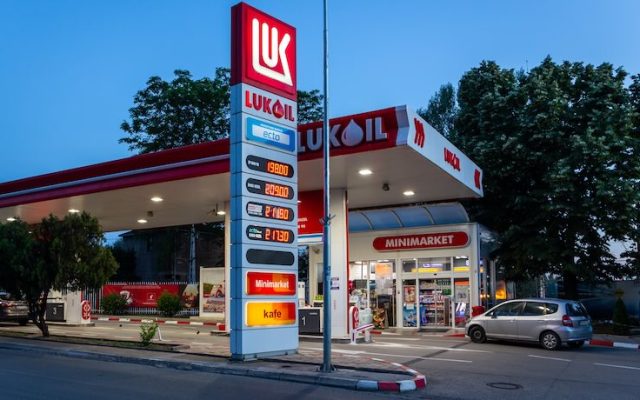
  • GL 128C (issued April 14, 2026, effective through October 29, 2026) authorizes the maintenance and orderly wind-down of Lukoil’s retail fueling stations outside Russia. Without it, thousands of stations across dozens of countries would face an immediate operational shutdown affecting end consumers.
  • GL 130A (issued April 14, 2026, effective through October 29, 2026) authorizes virtually all transactions involving four Bulgarian Lukoil entities, including the Lukoil Neftohim Burgas refinery. This is not wind-down authorization but routine operational coverage.

The asymmetry in duration is the point. The operational licenses run more than six months out, into late October. The negotiation license runs only 30 days, until May 30. That gap reveals OFAC’s calibration: the agency is willing to give retail infrastructure and the Bulgarian cluster a long planning horizon to keep them functioning, while keeping the deal itself on a tight timeline to push the negotiations toward conclusion.

Signals for Negotiators and Compliance Teams

The fifth extension of the negotiation license carries several distinct signals for market participants.

First, the Lukoil foreign assets sale remains a viable scenario. OFAC has now sustained the negotiation track for six consecutive months without terminating it. Combined with the long-horizon extensions of the operational licenses, this indicates that Treasury views Lukoil’s foreign portfolio as a candidate for structured divestment rather than for liquidation.

Second, the window for executing a conditional contract is narrowing. The 30-day step embedded in GL 131E tells participants not to expect open-ended extensions. The transaction discussed last November with Gunvor SA was rejected by the U.S. administration before the original GL 131 was even issued, and no concrete replacement buyer has been publicly announced since. If no signed conditional contract emerges within the 30-day window, further extensions may become a matter of political negotiation rather than administrative routine.

Third, any conditional contract executed under GL 131E must contain an explicit provision making performance contingent on receipt of a separate OFAC specific license. The absence of such a clause renders the contract a sanctions violation for every party involved. This is not a drafting nicety; it is a precondition for the validity of the authorization itself.

Fourth, the updated FAQs introduce no substantive changes. Buyers and their counsel can continue structuring transactions against the same criteria that have applied since fall 2025. Stable conditions are a meaningful positive signal for serious bidders.

Practical Recommendations

For anyone involved in or advising on the LIG transaction, GL 131E sets up several immediate priorities:

  • Review of contract conditionality. Draft conditional agreements must explicitly reference the requirement of a separate OFAC specific license and incorporate the corresponding condition precedent.
  • Deal structure aligned with FAQ 1224. The architecture of the transaction must be designed from the outset to satisfy the four conditions of FAQ 1224. A structure that cannot demonstrate clean severance from Lukoil, blocking of proceeds, and absence of present-day benefit will face significant friction at the specific license stage.
  • Compliance documentation refresh. Internal memoranda, bank instructions, draft contracts, and correspondence must replace references to GL 131D with GL 131E. Effective date: April 29, 2026.
  • Monitoring of negotiation conduct. OFAC retains the discretion to revoke the license if it concludes that negotiations are not being conducted in good faith. This adds a behavioral risk dimension on top of the calendar risk.

OFAC’s next move on the 131 series is expected around May 30, 2026. By that point, either a signed conditional contract for the Lukoil foreign assets sale will have surfaced (opening the next phase, the application for an OFAC specific license), or OFAC will issue GL 131F with a further extension. Each scenario will require an updated legal assessment.

If you are involved in a potential LIG transaction or supporting compliance processes connected to Lukoil’s foreign assets, we can analyze your situation in light of GL 131E and prepare the required legal position.

50 percent rule Lukoil foreign assets sale OFAC OFAC license OFAC sanctions US sanctions

Related Posts

OFAC Secondary Sanctions: Why Foreign Banks Will Now Reject Payments Faster
Business in the USAUS SanctionsNovember 7, 2026

OFAC Secondary Sanctions: Why Foreign Banks Will Now Reject Payments Faster

A wire routed through Dubai or Istanbul comes back with two words: "compliance reasons." The counterparty isn't on any list you checked, the goods are ordinary, and the bank won't say anything else. Expect...

View More
Source of Funds Legal Opinion: When a Client’s Explanation Isn’t Enough for the Bank
Business in the USAUS SanctionsOctober 30, 2026

Source of Funds Legal Opinion: When a Client’s Explanation Isn’t Enough for the Bank

Consider a typical case. The bank has come back a second time. You answered the first request properly: a detailed letter on where the money came from, when you sold your stake, and why the wire went...

View More
OFAC GL 131K: One More Month for the Lukoil Deal, No New Conditions
US SanctionsOctober 23, 2026

OFAC GL 131K: One More Month for the Lukoil Deal, No New Conditions

One day before the previous authorization ran out, the Treasury Department’s Office of Foreign Assets Control issued OFAC GL 131K under the Russian Harmful Foreign Activities Sanctions Regulations (RuHSR,...

View More
Delisting After the Graham Act: What Changed for Those Already on the SDN List
US SanctionsOctober 19, 2026

Delisting After the Graham Act: What Changed for Those Already on the SDN List

Updated October 17, 2026, to reflect the President's executive order of October 16, 2026. It happens more often than you would think. A delisting petition went in more than a year ago. The Office of...

View More
Previous Post
Next Post
How Can We Support You? Get in touch with us to find out more or make an appointment. Get in Touch

Categories

  • Business in the USA
  • Inheritance in the US
  • US Sanctions

Popular

  • US Anti-Russian Sanctions Based on E.O. 14024 Extended
    US Sanctions

    US Anti-Russian Sanctions Based on E.O. 14024 Extended

  • OFAC Request for Additional Information: What Does It Mean?
    US Sanctions

    OFAC Request for Additional Information: What Does It Mean?

  • Anatoly Karachinskiy – the First Russian Removed from OFAC SDN List
    US Sanctions

    Anatoly Karachinskiy - the First Russian Removed from OFAC SDN List

  • Statute of Limitations for OFAC Lawsuits: Why Six Years Is Less Than It Sounds
    US Sanctions

    Statute of Limitations for OFAC Lawsuits: Why Six Years Is Less Than It Sounds

  • OFAC Delisting Petition Documents: What Works and What Gets Ignored
    US Sanctions

    OFAC Delisting Petition Documents: What Works and What Gets Ignored

Tags

50 percent rule Alfa Group American attorney American lawyer Anatoly Karachinskiy asset blocking asset freeze business in the USA How to Open a US Company how to open business in the USA Lukoil sanctions OFAC OFAC attorney OFAC general license OFAC lawyer OFAC license OFAC sanctions OFAC SDN OFAC SDN List OFAC SDN List removal OFAC specific license OFAC subpoena register a company Removal from the OFAC SDN List sanctions attorney sanctions compliance sanctions on Russian oil SDN list SDN OFAC SPB Exchange start a business in the USA U.S. sanctions U.S. sanctions list US bank account US bank account for foreigners US company US Department of Commerce US LLC US Russia-Related sanctions US sanctions US sanctions against Russia US sanctions compliance US sanctions list US startup РСПП

Disclaimer

All content provided on FesenkoLaw.com is for informational purposes only and does not constitute legal advice or establish any attorney-client relationship. The owner of this site makes no representations as to the accuracy or completeness of any information on this site and will not be liable for any possible errors or omissions.

Fesenko Law Offices, P.C.

OFAC SANCTIONS

  • Legal Representation by OFAC Lawyers
  • OFAC Licenses for Asset Unfreezing
  • OFAC Sanctions Compliance

OFAC SDN LIST

  • Challenging OFAC SDN List Designations
  • OFAC SDN List Removal
  • How to Stay Out of the OFAC SDN List

OFAC LITIGATION

  • Representation of Clients before the U.S. District Court for the District of Columbia
  • Judicial Challenges to OFAC SDN List Designations
  • Asset Unfreezing through U.S. Federal Court

OPENING BUSINESS IN THE U.S.A.

  • Company Registration in the U.S.A.
  • Startup Formation in the U.S.A.
1050 30th Street NW, Washington, DC 20007 TEL +1 202 821 2303
30 Wall Street, 8th Floor, New York, NY 10005 TEL +1 212 542 0240
Mail info@fesenkolaw.com
Get in Touch
© 2026 FesenkoLaw.com. All rights reserved. | Attorney Advertising. Prior results do not guarantee a similar outcome.
Privacy policy
GDPR Cookie Banner

We use cookies to optimize our website performance, to improve functionality and to analyze traffic. By clicking “Accept necessary” or by closing this message you agree to accept the necessary cookies which are essential for the operation of the website. If you choose to “Accept All” you agree to accept analytics cookies as well.

FesenkoLaw.com
Powered by  GDPR Cookie Compliance (opens in a new tab)
Cookie Files Policy

Your privacy is important to us. We use cookies to make our website work more efficiently for you. Cookies are small data files that are placed on your device the first time you visit a website. We only use strictly necessary cookies that are essential for the website to function, and cookies to analyze website traffic and visited pages.
Our website uses two types of cookie files:
1) Strictly necessary
2) Analytics cookies

Strictly necessary

These cookies are essential for technical reasons to enable our website to operate. Because these cookies are necessary, you cannot refuse them without affecting how our services work. You can block or delete them by changing your browser settings, but keep in mind that this may limit the functionality of our website services.

Analytics cookies

These cookies collect information about how visitors use our website, such as which pages they go to most often and whether they receive error messages. They don’t collect information that identifies a visitor; we use it strictly to fix problems and improve how our website works.